
ES-ES▼

Este producto es compatible con los equipos y aplicaciones de las siguientes marcas, o apto para ellos, solo como referencia para la selección. Las marcas comerciales pertenecen a sus respectivos propietarios; no implican afiliación ni respaldo.
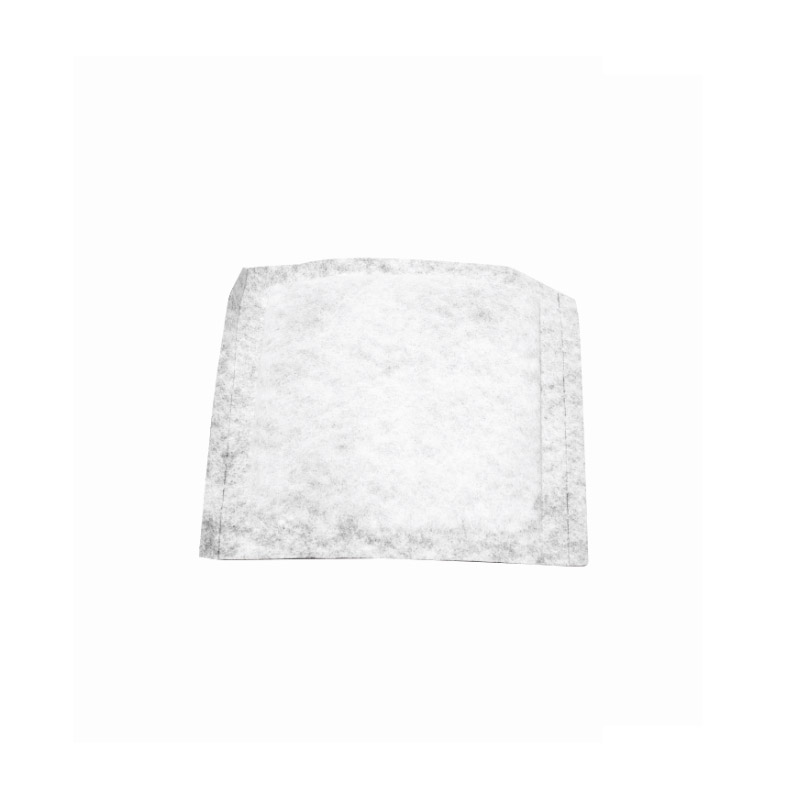
This pet toilet filter cartridge is a coconut shell activated carbon filter designed to adsorb odors, ammonia and TVOCs from pet waste in smart litter boxes, automatic pet toilets and pet air purifiers. It pairs a high-iodine coconut shell carbon layer with an eco-friendly PET structure and non-woven wrap to balance odor removal, airflow and service life. The product is offered by Ranveth for OEM and ODM programs.
Odor control in a litter box filter is a materials problem before it is a packaging problem. The working layer here is high-iodine coconut shell activated carbon, chosen for its developed pore structure and high surface area. With a specific surface area that can reach over 1000 m²/g, the carbon presents a large adsorption target to ammonia, hydrogen sulfide and other volatile molecules released by pet waste. The carbon is contained within an eco-friendly PET structure and covered with a non-woven layer that keeps the media in place while allowing air to move through the cartridge.
The pairing matters in three ways. First, efficiency: a high-iodine carbon gives more active sites per gram, so the cartridge can capture odor molecules at the concentrations found in a working litter box. Second, airflow resistance: the non-woven wrap and the PET structure are selected to let air pass without channeling or excessive pressure drop, which matters when the filter sits in the path of a fan in a smart toilet or pet air cabin. Third, service life: a stable carbon bed that does not settle or dust excessively holds its capacity longer, so the replacement interval stays predictable for the pet owner.
Because the media and the structure are developed together, changing one changes the other two outcomes. If a customer needs a longer life, carbon loading and layer thickness can be adjusted; if a device has a low-power fan, the structure can be opened up to reduce resistance. This is the basis of the custom builds described below.
| Item | Detail |
|---|---|
| Product name | Pet toilet filter cartridge / pet deodorizing activated carbon filter |
| Core materials | High-iodine coconut shell activated carbon with eco-friendly PET structure and non-woven wrap |
| Core function | Adsorbs odors and removes ammonia, TVOCs and other volatile odors from pet waste |
| Applications | Built-in filter for smart litter boxes, automatic pet toilets, pet air cabins and pet deodorizers |
| Size | Customized to customer molds and device cavities; cutting, edge sealing and special shapes available |
| Suggested replacement | 1–3 months, depending on the number of pets and device operating frequency |
| Production standards | ISO 9001 / 14001, IATF 16949, BSCI, environmentally friendly and non-toxic directives; export-grade quality for Europe and the US |
The cartridge is designed as a built-in consumable for devices that move air across a litter area or a pet enclosure. Typical installations include smart litter boxes that circulate air to reduce odor, automatic pet toilets with integrated ventilation, pet air cabins used for transport or resting, and stand-alone pet deodorizers. In each case the filter is matched to the cavity and airflow path of the device, so the carbon has enough contact time with the airstream to work.
Because the filter is a consumable, the replacement rhythm of the end user shapes the specification. A single-cat household following the suggested 1–3 month interval places different demands on carbon loading than a multi-cat home or a device that runs continuously. Buyers can therefore treat the cartridge as a platform: the same basic media pairing can be tuned for different replacement cycles and different device sizes without changing the fundamental construction.
Custom builds start from the device, not from a catalog number. To quote accurately we ask for the following:
With these inputs we can propose a carbon type and loading, a PET structure and non-woven wrap, and a cut shape that fits the cavity. If a current filter exists, sending it as a reference shortens the development loop considerably.
Ranveth is backed by a manufacturer with more than 20 years of filtration research and manufacturing experience and a track record of exporting to Europe, the US, Japan and South Korea. The points most relevant to this cartridge are:
The plant is located in Zhongshan, Guangdong, China, and operates multiple automated production lines with monthly capacity reaching millions of pieces.
If you are evaluating a filter for a new litter box or pet toilet, the most useful next step is a sample and a written quote against your device. Please include the device model, size or drawing, airflow, operating conditions and target quantity in your message. You can reach our team through the contact page, and we will respond with a proposal covering media, structure, MOQ and lead time.
It uses high-iodine coconut shell activated carbon as the working layer, held in an eco-friendly PET structure and covered with a non-woven wrap. The carbon provides the adsorption surface for ammonia and other odor molecules, while the structure and wrap manage airflow and keep the media in place. The combination is selected so that odor removal, resistance and service life are balanced together.
The coconut shell carbon has a specific surface area that can reach over 1000 m²/g, which gives it a large capacity for adsorbing ammonia, hydrogen sulfide and other volatile odor molecules from pet waste. Odor removal efficiency can reach over 90% under the test conditions used for these media. Our CNAS-accredited laboratory can issue test reports covering filtration efficiency, dust holding capacity and resistance for the specific build.
Yes. The cartridge is made to order against the customer's mold and device cavity, and we can provide cutting, edge sealing and special shapes. Carbon type and loading, PET structure, non-woven wrap and packaging can also be adapted. To start, send the device model, a size drawing or a sample of the current filter.
The suggested replacement interval is 1–3 months, depending on the number of pets and how often the device runs. A single-cat household on intermittent use sits at the longer end, while multi-cat or continuous operation sits at the shorter end. Carbon loading can be adjusted during customization to match the replacement cycle you want to offer.
Standard specifications typically start at 5,000 pieces, while customized products depend on tooling and packaging requirements and generally start at 10,000 pieces. Standard items ship within 25–30 days after order confirmation and payment; customized items including tooling and printing take about 35–45 days. Long-term customers can be offered priority scheduling and VMI inventory support.
Yes. Standard stock samples are usually provided free of charge, with the customer covering international courier costs. Custom samples carry a sampling fee depending on complexity, which can be deducted from the bulk order payment. Samples are typically sent within 3–7 working days, and CNAS test reports, material specifications and relevant certificates can accompany them for evaluation.
The plant holds ISO 9001, ISO 14001 and ISO 45001, as well as IATF 16949 awarded in 2024. Production runs in a 50,000 m² facility that includes 20,000 m² of cleanroom space across six cleanrooms. Quality control covers IQC, IPQC and OQC, with retained samples for each batch.
Send the device or application model, the size or a drawing, the airflow if known, the operating conditions, and your target quantity. With those inputs we can propose a media and structure and return a quote with MOQ and lead time. You can submit the details through our <a href="/en/contact">contact page</a>.