
ES-ES▼

Este producto es compatible con los equipos y aplicaciones de las siguientes marcas, o apto para ellos, solo como referencia para la selección. Las marcas comerciales pertenecen a sus respectivos propietarios; no implican afiliación ni respaldo.
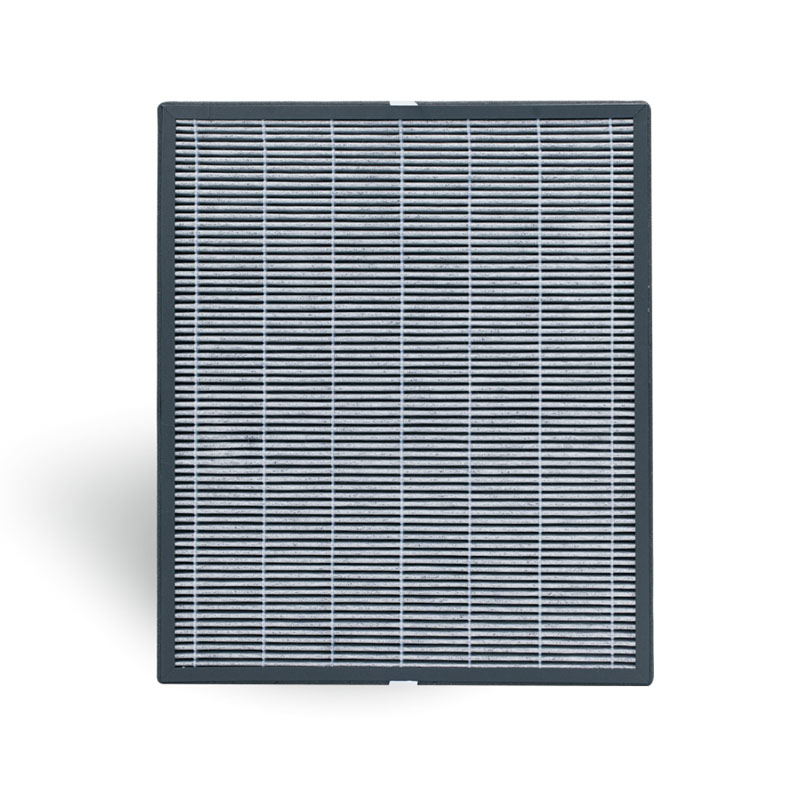
Ranveth plate-type activated carbon cloth filters combine high-iodine-value cellular activated carbon with a formaldehyde-removal catalyst composite to adsorb and break down harmful gases such as formaldehyde, benzene homologues and TVOC. They are designed for air purifiers, fresh-air systems, vehicle cabin filters and commercial or industrial odour-control equipment. This filter suits buyers who need a configurable carbon panel rather than a fixed catalogue item.
The performance of a carbon cloth filter starts with how the media are paired. Ranveth uses a high-iodine-value cellular activated carbon as the adsorbing layer, paired with an exclusive formaldehyde-removal catalyst composite. The carbon provides the porous surface that captures gas-phase pollutants; the catalyst layer is intended to support the breakdown of formaldehyde rather than only holding it. Together they target HCHO, benzene-series compounds and TVOC.
Layer build is kept deliberately simple so the filter can be adapted to different housings. Three structural forms are available: a flat laminated panel, a honeycomb-filled panel, and a sintered carbon block. The flat laminated form is a thin composite for space-limited slots; the honeycomb-filled form adds a structured carbon bed for higher capacity; the sintered block is a denser carbon body for applications that need a self-supporting element. Special shapes can be customised.
This pairing has a direct effect on efficiency, airflow resistance and service life. More carbon mass and finer media generally raise adsorption efficiency but also raise pressure drop, so the layer build is selected against the airflow the device can deliver. The catalyst composite is included to support formaldehyde decomposition over the filter's working life. Because the media are combined in a defined layer sequence, the filter can be specified to balance removal performance against the fan or air-handling capacity of the host equipment.
| Item | Detail |
|---|---|
| Core construction materials | High-iodine-value cellular activated carbon; exclusive formaldehyde-removal catalyst composite |
| Main performance targets | High-efficiency adsorption and catalytic decomposition of formaldehyde (HCHO), benzene-series compounds, TVOC and other harmful gases |
| Structural form options | Flat laminated type, honeycomb-filled type, sintered carbon block (special shapes available by customisation) |
| Core application scenarios | Household: air purifiers, fresh-air system pre-filters and high-efficiency filters, vehicle air-conditioning filter elements. Commercial and industrial: hospital cleanrooms, industrial waste-gas treatment, odour-removal equipment |
| Quality and certification standards | Tested in a CNAS-accredited laboratory; RoHS compliant; factory holds IATF 16949 certification |
The plate format fits equipment where a flat or shaped carbon panel can be inserted into a filter slot. In household air purifiers and fresh-air systems, the filter is used for pre-filtration and high-efficiency gas removal, depending on the layer build selected. In vehicle air-conditioning, the same media approach is used for cabin filter elements.
Commercial and industrial uses include hospital cleanrooms, industrial waste-gas treatment and odour-removal equipment. In these settings the filter is often specified as a replaceable gas-phase stage, with the carbon type and layer structure chosen to match the target pollutants and the available airflow.
To quote a custom plate filter, send the device or vehicle model, the required size or a drawing, and the airflow or water flow of the system. Please also state the operating conditions (temperature, humidity, target gases or odour sources), the quantity you expect per order, and any packing or labelling requirements. With these details, the Ranveth team can propose a media pairing and layer build that fits the housing and the duty point.
Customisation covers dimensions, structural form (flat laminated, honeycomb-filled or sintered carbon block), carbon type and loading, and packaging. If you already have a sample or drawing, share it and we will review the fit against the available media combinations.
Media choices are test-backed at Ranveth. The company's own laboratory is CNAS-accredited and can issue test reports for filtration efficiency, dust-holding capacity and resistance. This means the carbon and catalyst pairing in a plate filter can be checked against measurable performance rather than described only on paper.
The production base in Zhongshan, Guangdong covers 50,000 m², including six cleanrooms totalling 20,000 m². The factory holds IATF 16949 certification, obtained in 2024, and operates ISO 9001, ISO 14001 and ISO 45001 systems. Products meet REACH and RoHS requirements and can be supplied with compliance documents. With more than 20 years of filtration development and manufacturing experience, Ranveth has built over 1,000 filtration solutions and supports OEM/ODM customisation of size, structure, media grade, frame material, logo and packaging.
If you are evaluating a carbon cloth filter for an air purifier, fresh-air system or odour-control unit, share your device or vehicle model, size or drawing, airflow or water flow, operating conditions and expected quantity. The Ranveth team will respond with a proposed media pairing, sample options and a quotation. You can start the conversation through our contact page.
It pairs a high-iodine-value cellular activated carbon with an exclusive formaldehyde-removal catalyst composite. The carbon adsorbs gas-phase pollutants, while the catalyst layer is designed to support formaldehyde breakdown. This combination targets HCHO, benzene-series compounds and TVOC.
The layer build is selected against the airflow the host device can deliver. More carbon mass or a denser form such as a sintered block can raise adsorption efficiency but also increases pressure drop. Ranveth reviews the device airflow and operating conditions to propose a build that fits the duty point.
Yes. Customisation covers dimensions, structural form (flat laminated, honeycomb-filled or sintered carbon block), carbon type and loading, and packaging. Special shapes are supported. Send a drawing or sample with your target size and quantity so the team can confirm feasibility.
Service life depends on the pollutant concentration and operating hours. The filter is intended for periodic replacement as part of the equipment's maintenance schedule. For a specific replacement interval, share your target gases and operating conditions and Ranveth will advise based on the media pairing selected.
Provide the device or vehicle model, required size or drawing, airflow or water flow, operating conditions and expected quantity. The Ranveth team will then propose a media pairing, confirm sample options and issue a quotation. Samples and quotes are handled through the contact page.
MOQ depends on the structural form and whether the build is standard or custom. For custom sizes, shapes or carbon types, the MOQ is confirmed with the quotation. Share your expected quantity so the team can advise on the most suitable arrangement.
Lead time is confirmed with the quotation and depends on the structural form, media selection and order quantity. Providing complete specifications early helps shorten the review. The team will state the expected schedule once the build is defined.
The filter is tested in a CNAS-accredited laboratory, is RoHS compliant, and is produced in a factory holding IATF 16949 certification plus ISO 9001, ISO 14001 and ISO 45001 systems. Compliance documents for REACH and RoHS can be supplied. Contact us with your market requirements to confirm the documentation set.