
KO-KR▼

본 제품은 아래 브랜드의 장비 및 응용 분야와 호환되거나 이에 적합하며, 선정 시 참고용으로만 제공됩니다. 상표는 각 소유자에게 귀속되며 파트너십이나 보증을 의미하지 않습니다.
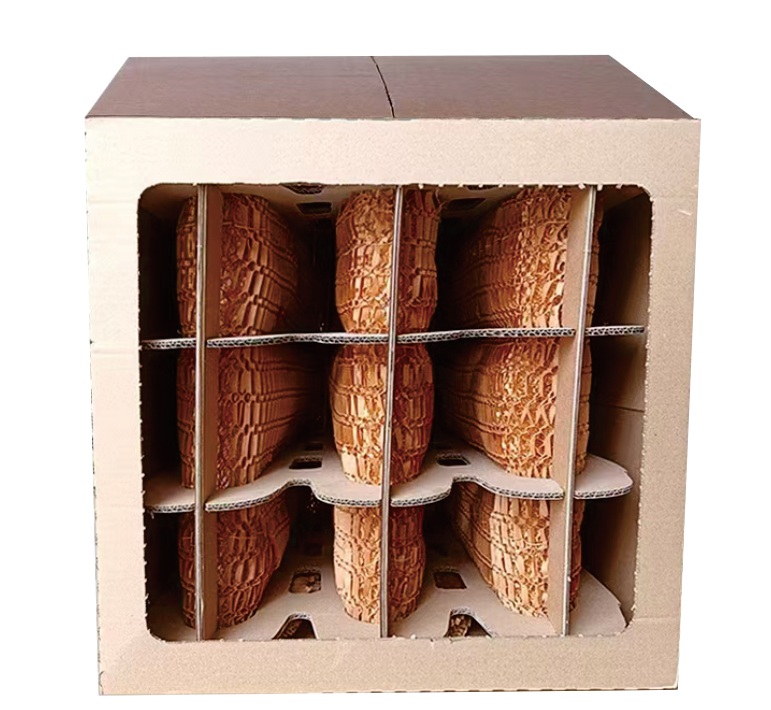
The Ranveth paint mist filter is a dry, labyrinth-style honeycomb filter box that captures overspray paint particles before they reach downstream ductwork, fans and exhaust treatment equipment. It is built for spray booths and coating lines in automotive refinishing, furniture painting and machinery manufacturing, and it holds 12–18 kg of paint per box while keeping airflow resistance stable. Ranveth pairs kraft-paper media with a layered honeycomb structure so that capture efficiency and pressure drop rise gradually rather than sharply, which is what makes the long service interval possible.
What separates this filter from a plain pad is the way the medium and the geometry are chosen together. The medium is flame-retardant kraft paper, folded into a honeycomb labyrinth that forces the airstream through a long, narrow path. As paint particles load onto the paper walls, the channels narrow slightly, and the capture rate climbs to 95%+ — the filter gets more efficient as it fills, not less.
That pairing drives the three numbers a buyer cares about. Efficiency: the tortuous path gives particles repeated chances to collide with and stick to the walls. Resistance: because loading happens along the channel walls rather than as a crust on the face, pressure drop rises slowly and exhaust volume is not choked off. Service life: with 12–18 kg of paint capacity per box, the replacement interval stretches well beyond what a thin glass-fibre or non-woven pad can offer, and you avoid the surface skinning that blocks conventional media early.
The kraft paper is flame-retardant, which matters where solvent-borne coatings are sprayed and where the filter sits upstream of other equipment. The dry format also means no water curtain, no wastewater sump and no sludge to dredge — loaded boxes are simply packed and sent for compliant disposal as solid waste.
| Item | Detail |
|---|---|
| Product type | Dry labyrinth honeycomb paint mist filter box |
| Media | Flame-retardant kraft paper, honeycomb labyrinth construction |
| Paint capture rate | 95%+; efficiency increases as channels narrow with loading |
| Paint holding capacity | 12–18 kg per box |
| Airflow resistance behaviour | Rises slowly with loading; does not reduce exhaust volume |
| Wastewater | None — dry process, zero wastewater |
| Disposal | Boxes packed and handled as compliant solid waste |
| Typical position in system | First-stage pre-filter ahead of VOCs treatment |
| Common downstream pairing | Medium-efficiency filter media plus activated carbon box |
| Suited coatings | Waterborne paints, clear coats and other high-viscosity overspray |
| Typical applications | Automotive refinish booths, furniture spray rooms, machinery coating shops |
| Customisation | OEM/ODM modular sizes to match booth exhaust section structure |
| Manufacturing | Made in Zhongshan, Guangdong, China; 50,000 m² plant |
The filter is most often specified for automotive body and parts painting, furniture spray lines, and coating shops in machinery and hardware manufacturing. In these rooms the exhaust section pulls a heavy, sticky overspray load, and a filter that face-loads will blind within weeks. The honeycomb box is designed for exactly that duty.
It works particularly well with waterborne paints, clear coats and other high-viscosity coatings, where wet curtains tend to generate mist and secondary contamination. Because the unit runs dry, there is no water chemistry to monitor and no odour or bacterial growth in a recirculating sump.
In a full exhaust train, the honeycomb box is normally placed as the first-stage pre-filter for VOCs abatement. Behind it, a medium-efficiency filter pad followed by an activated carbon box completes the chain, so paint mist and odour are both addressed before discharge. Sizing the first stage correctly protects everything downstream — the carbon bed lasts longer when the paint load never reaches it.
Ranveth builds these boxes to modular sizes that fit the exhaust section of your booth, so the more you can tell us about the installation, the closer the first sample will be. Please include:
With those details we can propose a cell size and layer count, and confirm whether the standard box fits or a modular variant is needed. If you already have a target replacement interval, tell us — it helps us match paint capacity to your maintenance cycle.
Ranveth's media choices are backed by measurement. Our in-house laboratory holds CNAS accreditation from the China National Accreditation Service for Conformity Assessment and issues test reports covering filtration efficiency, dust and paint holding capacity, and resistance, so the performance figures we quote can be traced to test data rather than estimates.
Production runs in a 50,000 m² plant in Zhongshan, Guangdong, which includes six cleanrooms totalling 20,000 m². The site operates under IATF 16949, the automotive quality management system certification obtained in 2024, together with ISO 9001, ISO 14001 and ISO 45001. Quality control covers incoming material inspection, in-process checks and outgoing inspection across the line.
We have more than 20 years of filtration development and manufacturing experience and have supplied export markets in Europe, the United States, Japan and Korea for over two decades. Products meet REACH and RoHS requirements and compliance documents can be provided. OEM/ODM support covers dimensions, structure, filter media grade, frame material, logo and packaging, and we have developed more than 1,000 filtration solutions to date.
If you would like to test a box on your own line before committing to volume, we can supply samples for trial. To quote accurately, send the device or booth model, the size or a drawing, the airflow at the filter position, your operating conditions and the quantity you have in mind. Our engineers will review the details and come back with a recommendation and pricing.
Contact our team with your specifications, and we will take it from there.
It uses flame-retardant kraft paper folded into a honeycomb labyrinth structure. The narrow, tortuous channels give paint particles repeated contact with the paper walls, and the capture rate reaches 95%+ as the channels narrow with loading.
Paint loads along the channel walls instead of forming a crust on the face, so resistance rises slowly and exhaust volume stays stable. Combined with a paint capacity of 12–18 kg per box, this extends the replacement interval compared with thin media that blind early.
Yes. We offer OEM/ODM modular sizing based on the structure of your spray booth exhaust section, along with customisation of dimensions, structure and packaging. Send a drawing or the opening dimensions and we will confirm the closest fit.
Yes, samples can be supplied for trial on your line before volume purchase. Sharing your coating type, airflow and booth dimensions helps us select the most suitable configuration for the trial.
Minimum order quantities and lead times are confirmed per project, since custom sizes and structures affect both. Tell us your required quantity and schedule and we will quote accordingly.
Replacement is typically judged by pressure drop or by visual inspection showing the media is saturated. Because each box holds 12–18 kg of paint, intervals are long, but the exact point depends on your overspray load and coating type.
No. It is a dry process with zero wastewater. Loaded boxes are packed and handled as compliant solid waste, which avoids the water fees, discharge limits and sludge handling associated with wet curtains.
Please send the booth or device model, size or drawing, exhaust airflow, operating conditions, coating type and quantity. With those details our engineers can recommend a configuration and provide pricing — just reach out via our contact page.